
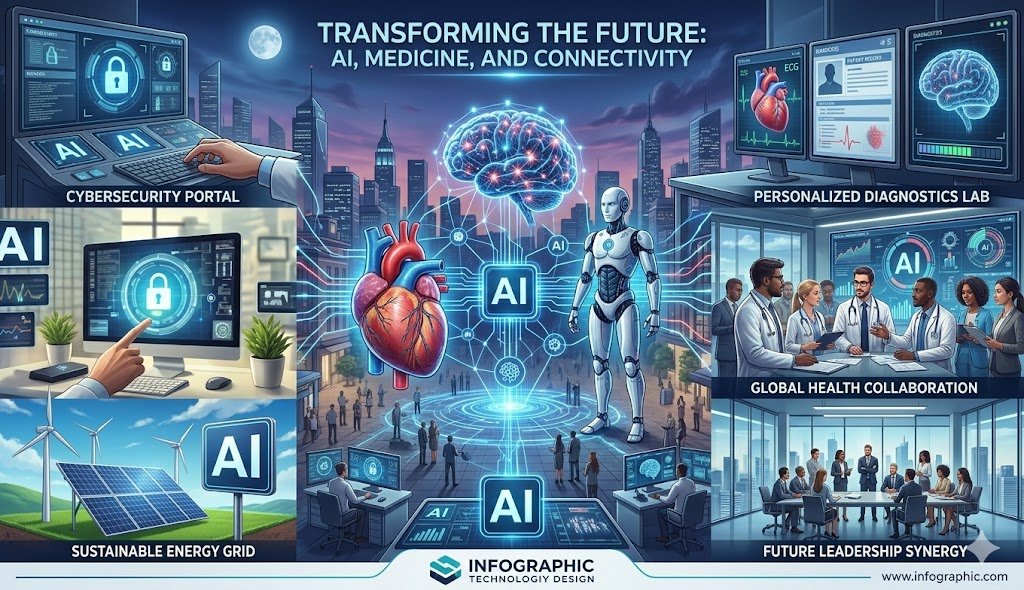
Introduction
Artificial Intelligence (AI) is no longer a futuristic concept limited to science fiction. In 2026, AI has become an essential part of everyday work across almost every industry. From small businesses to large corporations, organizations are using AI tools to improve efficiency, reduce workload, and make faster decisions.
Daily work routines that once required hours of manual effort can now be completed in minutes with the help of intelligent systems. Whether someone works in marketing, education, finance, customer service, or freelancing, AI is reshaping how tasks are performed and how productivity is measured.
This article explains how artificial intelligence is changing daily work, the benefits it brings, and what workers need to know to adapt successfully.
Understanding AI in the Workplace
Artificial Intelligence refers to computer systems that can analyze data, recognize patterns, and make decisions with minimal human involvement. Unlike traditional software that follows fixed instructions, AI learns from experience and improves over time.
In workplaces, AI is used to automate repetitive tasks, assist decision-making, and provide insights based on large amounts of data. Instead of replacing workers completely, AI often works as a digital assistant that enhances human performance.
Automation of Repetitive Tasks
One of the biggest impacts of AI is automation. Many routine tasks that previously consumed valuable time are now handled automatically.
Examples include:
- Sorting emails and managing inboxes
- Scheduling meetings
- Data entry and report generation
- Customer support responses
- Invoice processing
By automating repetitive work, employees can focus on creative and strategic responsibilities rather than manual operations.
Faster Decision-Making Through Data Analysis
Modern businesses generate massive amounts of data every day. Analyzing this information manually is difficult and time-consuming. AI systems can process data quickly and identify patterns that humans might miss.
Companies use AI to:
- Predict customer behavior
- Analyze market trends
- Improve sales strategies
- Detect risks and fraud
This allows managers and business owners to make informed decisions based on real-time insights.
AI in Remote Work and Digital Collaboration
Remote work has grown significantly, and AI plays a major role in supporting distributed teams. Smart collaboration platforms now include AI features that improve communication and organization.
AI tools can:
- Summarize meetings automatically
- Transcribe conversations
- Suggest tasks and deadlines
- Organize project workflows
These features help teams remain productive even when working from different locations.
Improving Customer Service
Customer service has experienced one of the biggest transformations through AI. Chatbots and virtual assistants now provide instant responses to customer questions at any time of day.
Benefits include:
- Faster response times
- Reduced workload for support teams
- Consistent customer interaction
- Lower operational costs
Human agents still handle complex issues, while AI manages common inquiries efficiently.
AI in Content Creation and Marketing
Marketing professionals increasingly rely on AI tools for content creation and campaign optimization. AI helps generate blog ideas, write drafts, analyze audience engagement, and recommend marketing strategies.
Businesses can now:
- Create personalized advertisements
- Target the right audience
- Optimize social media posts
- Analyze campaign performance automatically
This allows marketers to focus more on creativity and strategy rather than manual analysis.
Workplace Productivity and Time Management
AI-powered productivity tools help employees manage their time more effectively. Smart assistants can prioritize tasks, send reminders, and suggest optimal work schedules based on user behavior.
For freelancers and remote workers, AI tools reduce distractions and improve workflow organization, leading to higher efficiency and better results.
New Skills Required in the AI Era
As AI changes daily work, skill requirements are also evolving. Technical expertise is helpful, but not everyone needs to become a programmer.
Important future skills include:
- Digital literacy
- Problem-solving
- Creativity
- Critical thinking
- Adaptability
- Communication skills
Workers who learn how to collaborate with AI tools will have a strong advantage in the job market.
Challenges of AI in the Workplace
Despite its benefits, AI adoption also introduces challenges.
Job Transformation: Some roles may change or disappear due to automation.
Privacy Concerns: AI systems often rely on large amounts of user data.
Accuracy Issues: AI recommendations still require human review.
Learning Curve: Employees must adapt to new technologies.
Organizations must balance automation with human oversight to ensure responsible use.
The Future of Work with AI
In the coming years, AI is expected to become even more integrated into daily work. Intelligent assistants may handle scheduling, communication, research, and analytics automatically.
Rather than replacing humans, future workplaces will likely combine human creativity with machine intelligence. Workers will focus on innovation, leadership, and emotional intelligence—areas where humans excel.
Conclusion
Artificial Intelligence is fundamentally changing how people work every day. By automating repetitive tasks, improving decision-making, and enhancing productivity, AI allows individuals and businesses to achieve more in less time.
Adapting to AI is no longer optional; it is a necessary step toward future career success. Those who learn to use AI as a supportive tool will be better prepared for the evolving digital workplace.